

Friday, 23 October 2026, 10:00-15:00
Hyvää päivää! Helsinki !
Discover the groundbreaking research of Japan’s leading university innovators, who are preparing to launch global ventures, particularly in Finland and Europe.
These promising minds are ready to transform their work into impactful businesses, and they are looking for investors and collaborators to join them on this journey. Be part of the next big thing in innovation — join us at Helsinki Partners head office.
※This event will be presented as part of the “KSAC Finland Program 2026” in Helsinki and Espoo.
Kansai Startup Academia Coalition(KSAC), a platform to create innovative university spinoffs in Kansai region, Japan, is bringing five trailblazing technologies to the global stage - reshaping the future of innovations from academia.
Join us to build meaningful global connections and explore innovations that make a real impact. Don’t miss this chance to connect and collaborate!

Date and time
Friday, 23 October 2026, 10:00-15:00
Organizer
Osaka Business Development Agency
(secretariat office / Kansai Startup Academia Coalition)
Collaborating partner
Helsinki Partners
Agenda
(Schedule may change)
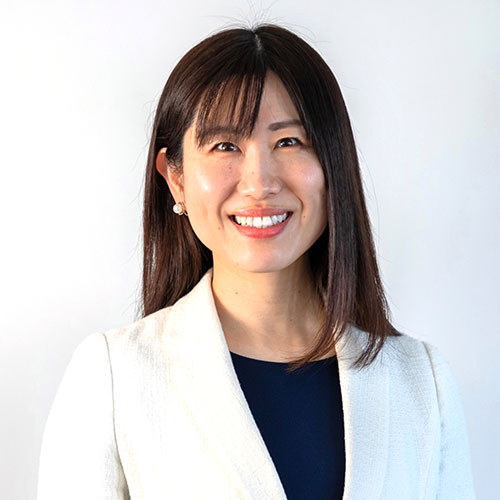
Creating social impact and transforming industries requires collaboration among a wide range of stakeholders, including academia, business, capital, and government. With this premise, Japan’s impact investing ecosystem is also growing, bringing together more capital and a broader range of stakeholders to address social challenges.
This speech explores how Finland connects research, entrepreneurship, investment, and industry to turn knowledge into business and social impact. In particular, it focuses on an ecosystem where different strengths are brought together to create greater impact, rather than expecting one person or organization to do everything.
Through examples from Finland, the speech considers what Japanese researchers and innovation ecosystem builders can learn, and how these insights can contribute to future collaboration between Japan and Finland.
Hiromi Tsuiji has been engaged in venture investment since 2008, when she began her career at Japan Asia Investment Company. After gaining experience at an independent venture capital firm, she joined Shinsei Bank Group (now SBI Shinsei Bank) in 2015. There, she was involved in investments and loans to unlisted companies, as well as financial product sales to institutional investors.
Since 2019, she has focused on impact investing. She was involved in the “Childcare Support Fund,” the first impact investment fund established by a Japanese banking group, and also served as a Director of the second impact fund, the “HATARAKU Fund.”
In September 2024, she joined Impact Capital Limited as a Director, following her departure from SBI Shinsei Bank.
She is a JES-Certified Professional Evaluator, with extensive experience in venture investment, impact investing, and supporting emerging companies.


Kyoto University
Program-Specific Associate Professor
Hakubi Center for Advanced Research / Research Center for Environmental Quality Management, Kyoto University
Haruka Takeuchi, Ph.D., is a Program-Specific Junior Professor at the Hakubi Center for Advanced Research, Kyoto University, specializing in environmental engineering and water quality management. She received her Ph.D. in Environmental Engineering from Kyoto University in 2018. After working as a postdoctoral researcher at Kyoto University and the University of Tokyo, she joined the Research Center for Environmental Quality Management (RCEQM), Kyoto University, as an Assistant Professor in 2019. In 2023, she spent one year as a visiting researcher at the Technical University of Munich (TUM), Germany. Since 2026, she has been a Program-Specific Junior Professor at the Hakubi Center for Advanced Research, while continuing her research at RCEQM.
Her research focuses on water reuse and water quality management, with particular expertise in membrane treatment, advanced oxidation processes, and the analysis and removal of trace organic contaminants. Her work has expanded from fundamental studies of water treatment processes to the development and field validation of water reuse systems. She is actively engaged in international research collaborations and field studies in Asia and Europe. She also serves as a Management Committee Member of the International Water Association (IWA) Water Reuse Specialist Group.
Her current research focuses on developing decentralized water reuse systems for practical implementation. Looking ahead, she aims to explore how operational data from multiple sites can support site-specific system design, operation, and maintenance, ultimately contributing to more resilient, resource-efficient, and circular water infrastructure.
Our research aims to develop advanced decentralized water reuse systems that enable water to be treated and reused where it is needed. Growing water scarcity, rising water costs, and aging centralized infrastructure are increasing the need for more flexible and resource-efficient water systems. We are developing compact treatment systems that integrate membrane filtration and advanced oxidation processes to produce safe, high-quality reclaimed water for non-potable applications.
Beyond treatment technology, our vision is to create a data-driven platform for decentralized water reuse. Operational data collected from multiple demonstration sites will be used to optimize system design, operation, and maintenance according to local water quality and user needs. As the network expands, accumulated data can continuously improve system performance and support more efficient deployment.
By integrating water reuse technology with digital water management, we aim to transform decentralized systems from standalone treatment units into an evolving water infrastructure platform that contributes to a resilient and circular water future.

Kobe University
Associate Professor
Graduate School of Science, Technology and Innovation, Kobe University
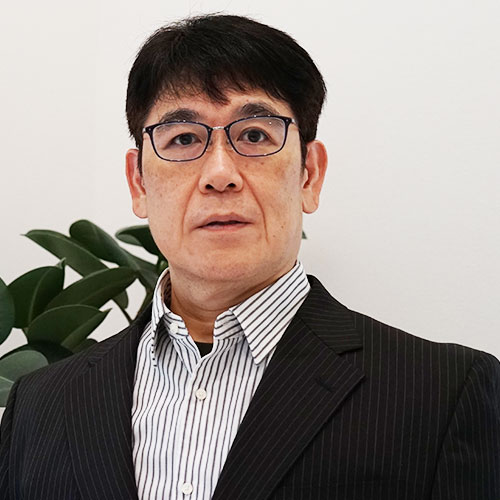
Shu Ishikawa is a microbiologist and biotechnologist at Kobe University whose research bridges fundamental cell biology and applied bioprocess engineering. For more than two decades, he has studied transcription, chromosome replication, cell division, cell differentiation, and bioproduction using Bacillus subtilis as both a model organism and an industrial host. His early work on cell-wall hydrolases established a foundation for engineering filamentous Bacillus cells, and he later developed GeF-seq and applied genome-wide approaches to analyze protein-DNA interactions and cellular regulation. Building on these fundamental studies, he now develops production strains and cultivation systems for advanced biomaterials.
Ishikawa's current research focuses on ultra-high-molecular-weight γ-L-polyglutamic acid (uLtra-PGA), a stereoregular biopolymer composed only of L-glutamate. His team has established high-productivity production in a low-cost defined medium and is developing scale-up and membrane purification processes. In the KSAC-GAP Step 2 project, he is leading efforts to validate uLtra-PGA as a cosmetic ingredient by defining product specifications, generating safety and functional data, conducting customer evaluations, and establishing CDMO-based manufacturing and quality-assurance systems.
His long-term goal is to translate fundamental Bacillus biology into sustainable biomaterials and scalable bioprocesses, and to build a university spinout capable of expanding uLtra-PGA from cosmetics into medical and industrial applications. He also seeks international partners for joint evaluation, manufacturing, and commercialization.
γ-Polyglutamic acid (γ-PGA) is a fermentation-derived biodegradable polymer. Commercial products are generally DL-PGA, whereas homochiral L-PGA offers stereoregularity that supports more ordered network formation and functional materials. However, conventional L-PGA production is slow and expensive, limiting its commercial use. We developed engineered Bacillus subtilis strains that produce ultra-high-molecular-weight L-PGA (uLtra-PGA; >20 MDa) in a low-cost defined medium. Productivity reaches up to 1.4 g/L/h, approximately 28 times the conventional L-PGA process, while medium cost is about one-seventh.
Our KSAC-GAP Step 2 project focuses first on cosmetic ingredients. We aim to establish product-market fit by defining product specifications, optimizing membrane purification, generating safety, stability, moisturizing, film-forming, and sensory data, and conducting customer evaluations. In parallel, we will validate reproducibility and manufacturing cost at 500–1,000 L through CDMO collaboration. After establishing cosmetics, we plan staged expansion into medical and industrial materials.

Nara Institute of Science and Technology
Project Professor at the Nara Institute of Science and Technology (NAIST)
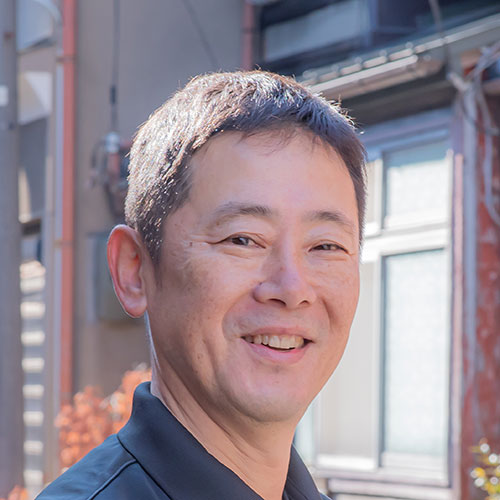
more informationDr. Motoshi Sobue is an executive, educator, and entrepreneur currently serving as the CEO of NeoCure Inc. and a Project Professor at the Nara Institute of Science and Technology (NAIST). His career spans technological innovation, startup leadership, and academic research, grounded in his conviction that technology can improve global quality of life.
Over his career, Dr. Sobue has co-founded and led three startup ventures. Before entering the startup ecosystem, he gained extensive corporate and executive experience across multinational corporations and financial institutions, holding management roles at Intel, Dell, British American Tobacco (BAT), and the Bank of Japan (BOJ).
His educational background spans engineering, economics, and finance. He earned his Master of Science in Engineering from Waseda University, a Master of Arts in Economics from Duke University, and a Ph.D. in Engineering from NAIST, alongside holding a U.S. CPA certification. This cross-disciplinary training allows Dr. Sobue to integrate technical engineering concepts with strategic business development, financial oversight, and commercialization.
At his startups and NAIST, he oversees business operations and joint industry-academia initiatives, focusing on translating advanced research into practical technology solutions.
To achieve permanent treatment of Parkinson's disease and other neurological disorders through “photo therapy” based on optogenetic technology, we insert an optical device deep into the brain and deliver specific light stimulation to target neurons, inducing synaptic plasticity and repairing neural circuits. Because the treatment device can be removed after surgery, patients are expected to recover their daily lives through a lasting therapeutic effect.
During this development period, we aim to reach the stage where VCs or business corporations can make an investment decision, by confirming the efficacy and durability of the optical device and the plasticity induced by photo therapy.
Note that, in what follows, we describe Parkinson's disease as the target neurological disorder; however, promising target conditions for photo therapy also include chronic pain and substance dependence — all of which are conditions that photo therapy aims to address.

Kindai University
Professor, Faculty of Biology-Oriented Science and Technology, Kindai University
more information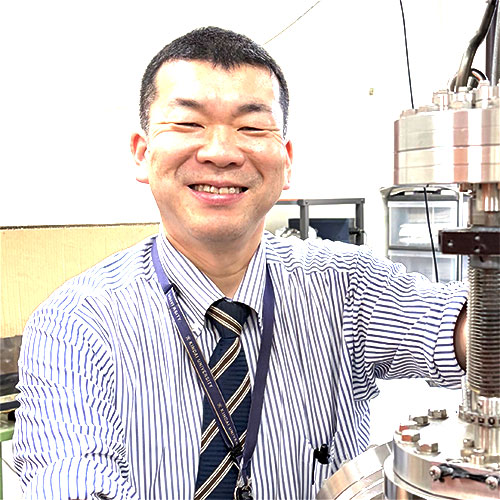
Hiroaki Nishikawa conducts research in solid-state chemistry and oxide electronics, with expertise in the fabrication of transition metal oxide thin films and artificial superlattices for electronic applications. In recent years, his research has centered on developing technologies that transform inherently brittle transition metal oxide materials into flexible platforms by exfoliating single-crystalline oxide thin films from their growth substrates and transferring them onto flexible polymer sheets. This approach aims to expand the use of high-performance oxide materials in wearable electronic devices.
Using this strategy, his group has successfully fabricated flexible piezoelectric Pb(Zr,Ti)O3 thin films, a material widely used in ultrasonic devices, vibration sensors, and pressure sensors, as well as flexible semiconducting TiO2 thin films, which hold promise for electrical signal sensing applications, including electrocardiogram (ECG) monitoring. A key technology developed by his team is the use of a buffer layer to suppress cracking and other exfoliation-induced damage, enabling the damage-free transfer of single-crystalline transition metal oxide thin films over practical areas exceeding 1 cm2, overcoming a major obstacle to the large-area integration of flexible oxide electronics.
By establishing this unique transfer technology, he is promoting the practical deployment of wearable devices based on transition metal oxides, a materials family that offers a rich variety of outstanding functional properties. His ultimate goal is to translate these advanced oxide materials into commercially viable wearable technologies with broad societal and industrial impact.
This research, led by Professor Hiroaki Nishikawa at Kindai University, focuses on developing flexible single-crystal ceramic thin films for next-generation wearable sensors. While conventional silicon-based wearables sensors are limited to detecting electrical and optical signals, this work utilizes functional oxides, such as magnetic (La, Sr)MnO3 and piezoelectric Pb(Zr, Ti)O3, to access previously unexplored physiological signals.
The core technological innovation is a patented, crack-free, large-area (~1 cm2) transfer process. By utilizing a water-soluble Sr3Al2O6 sacrificial layer, inherently brittle single-crystalline ceramic thin films are successfully transferred onto flexible polymer sheets while preserving their atomic-level structural integrity.
The research demonstrated successful, crack-free transfers of perovskite Pb(Zr, Ti)O3 and anatase TiO2 thin films. These highly functional, flexible thin films enable novel applications, including real-time ECG, continuous ultrasound imaging, and wearable brain/heart magnetic monitoring (MEG/MCG). Additionally, their high chemical stability enables hybrid integration with organic functional materials.

Osaka Medical and Pharmaceutical University
Graduate student
Department of Orthopedic Surgery, Osaka Medical and Pharmaceutical University
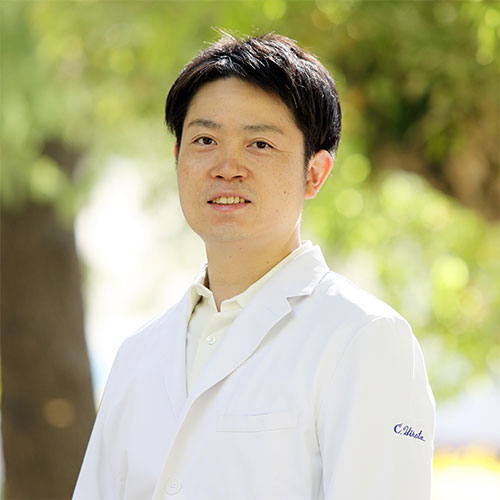
I am Chuji Hirota from the Department of Orthopedic Surgery at Osaka Medical and Pharmaceutical University. I am currently a graduate student conducting research on articular cartilage regeneration.
Before entering graduate school, I worked as an orthopedic surgeon, mainly performing surgery and providing outpatient care. Through my clinical experience, I became aware of the limitations of current treatments for articular cartilage injuries. This motivated me to pursue basic research in cartilage regeneration, with the ultimate goal of translating research findings into improved treatments for patients.
My favorite phrase is Ichigo Ichie, meaning “treasure every encounter,” and my favorite food is katsuo no tataki, lightly seared bonito, a specialty of my hometown.
Although I still have much to learn as a researcher, I hope to gain valuable knowledge and experience through this program and to make the most of this opportunity by interacting with all of you. I look forward to learning together.
Articular cartilage has limited intrinsic healing capacity, and the treatment of cartilage defects remains challenging. We developed a novel plug-type scaffold designed for donor-free, one-step cartilage repair.
In a porcine cartilage defect model, the scaffold combined with hyaluronic acid promoted cell migration and cartilage regeneration. At 6 months after implantation, the defects were completely covered with hyaline-like cartilage tissue, with histological findings approaching those of normal cartilage. These findings suggest that our scaffold provides an effective environment for cartilage regeneration and may overcome some of the limitations of current surgical treatments.
This donor-free, one-step approach has the potential to provide a simple and minimally invasive treatment option for articular cartilage defects.
The Kansai Startup Academia Coalition(KSAC) is dedicated to building a world-class startup ecosystem by fostering entrepreneurship in the Kansai region and consistently launching university-based startups. With the support of over 90 institutions, including universities, industry players, financial organizations, and local governments, KSAC is committed to driving innovation and positioning Kansai as a leader in the global startup landscape.
Click here


Kansai Startup Academia Coalition (KSAC Office)7th Floor,
Grand Front Osaka Tower-C, 3-1 Ofuka-cho, Kita-ku, Osaka 530-0011 Japan
e-mail: s-upeco-coalition@obda.or.jp